Early-life exposure to a mixture of phenols and respiratory health in preschool children
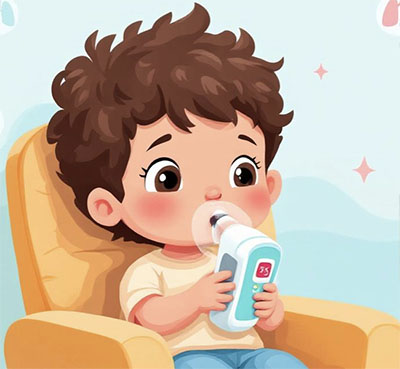
Is the respiratory health of pre-school children affected by exposure to phenols?
It is recognized that the early stages of life play a crucial role in programming future health. With regard to respiratory health, fetal life and early childhood are crucial periods for healthy lung development.
Phenols are ubiquitous compounds found in everyday products, including plastic food containers, receipts, personal care and cosmetic products, toothpaste, pharmaceuticals, and textiles.
Studies suggest that early exposure to these compounds may adversely affect health, particularly by impairing respiratory function and promoting the development of respiratory diseases such as asthma and COPD.
How was exposure to phenols estimated?
Exposure to phenols was measured in urine samples collected during pregnancy (second and third trimesters) and during the first year of life (at 2 months and 1 year of age).
How was lung function assessed?
At 2 months and 3 years of age, children in the SEPAGES cohort underwent a respiratory assessment.
At 2 months, during natural sleep, the examination made it possible to measure:
- the volume of air inhaled and exhaled with each breath (tidal volume),
- an indicator of small airway obstruction (lung clearance index),
- the volume of air remaining in the lungs after exhalation (functional residual capacity).
What are the main findings?
This study showed that exposure to phenols during pregnancy and the first year of life may have a deleterious effect on children's respiratory health, particularly by altering lung function from as early as 3 years of age.
What is the novelty of this study?
This study is the first to provide repeated and detailed information on phenol exposure during pregnancy and the first year of life. In addition, it is one of the few studies to assess respiratory function from a very early age.
What are the next steps?
Data collected at 8 years of age will make it possible to better understand how phenol exposure and respiratory health evolve over time in SEPAGES children. Researchers will be able to assess whether the effects observed at 2 months and 3 years persist at 8 years.
To go further: Alicia Guillien, Sam Bayat, Inès Amine, Anne Boudier, Sarah Lyon-Caen, Joane Quentin, Zoltán Hantos, Séverine Valmary-Degano, Amrit K. Sakhi, Cathrine Thomsen, Claire Philippat, Rémy Slama et Valérie Siroux ; Early-life exposure to a mixture of phenols and respiratory health in preschool children ; European Respiratory Journal ; 2025/09.
Read the article